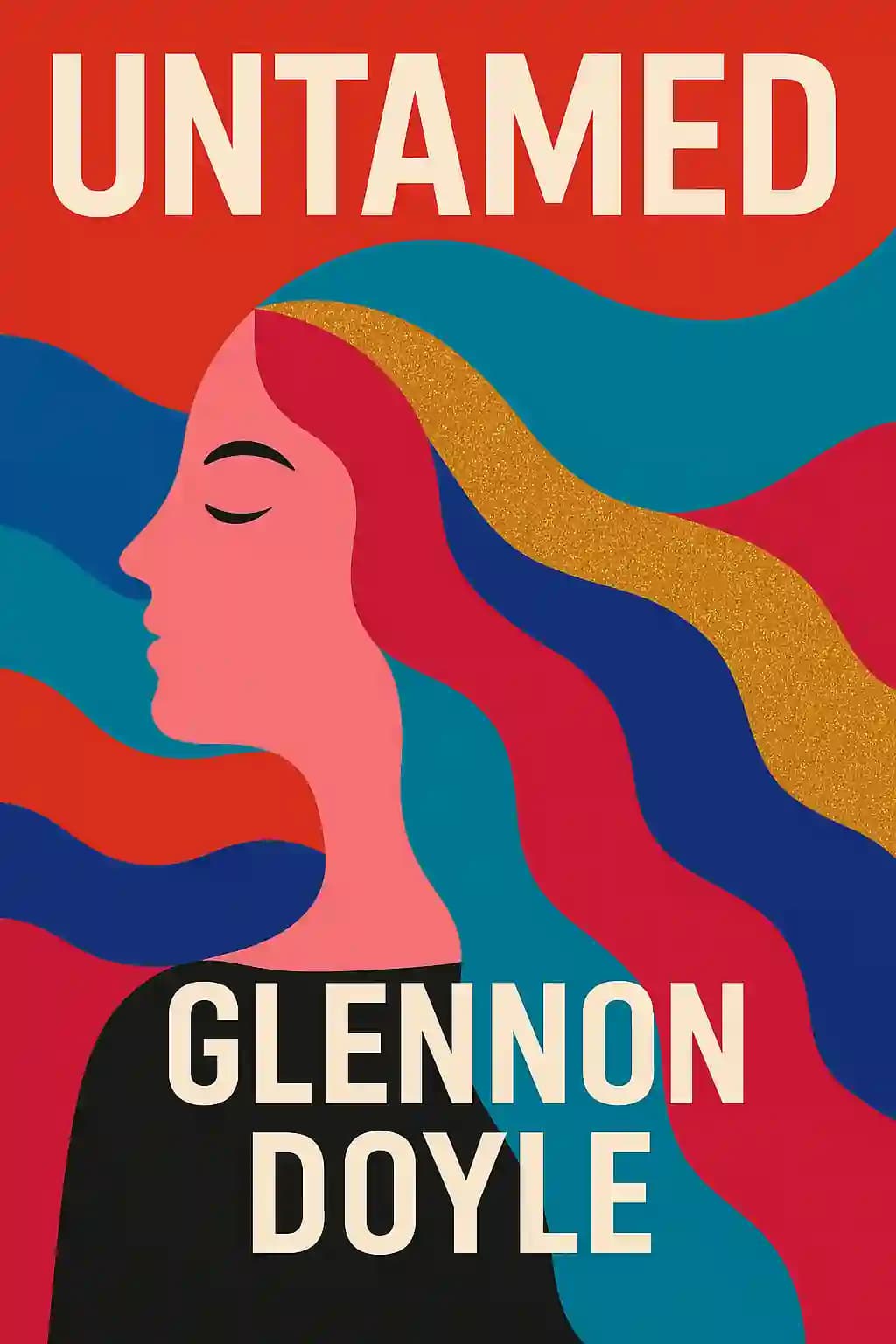
Glennon Doyle's "Untamed" - the memoir that topped NYT bestseller lists for seven weeks - invites women to break free from society's cages. Endorsed by Oprah and adapted for TV starring Sarah Paulson, it asks: What if your inner voice holds the key to authentic living?
Glennon Doyle, author of the #1 New York Times bestselling memoir Untamed, is a celebrated writer, activist, and advocate for female empowerment. Known for her raw storytelling and unflinching honesty, Doyle explores themes of self-discovery, authenticity, and societal expectations in her work.
A former teacher and recovering bulimic, she draws from her personal struggles and triumphs to inspire readers to embrace their "untamed" selves. Her prior memoirs, Love Warrior (an Oprah’s Book Club pick) and Carry On, Warrior, established her as a leading voice in modern personal growth literature.
Doyle founded Together Rising, a nonprofit that has raised over $55 million for marginalized communities, and co-hosts the top-charting podcast We Can Do Hard Things. Untamed sold over three million copies, became a cultural phenomenon, and has been translated into 40+ languages, solidifying Doyle’s impact as a transformative voice for women worldwide.
Untamed is a memoir and self-help book exploring societal expectations placed on women, advocating for authenticity over conformity. Doyle shares her journey of self-discovery after falling in love with soccer player Abby Wambach, which prompted her to reject societal norms and embrace her true self. Themes include body image, motherhood, mental health, and breaking free from cultural conditioning.
This book resonates with women seeking empowerment, LGBTQ+ audiences, and anyone feeling constrained by societal roles. It’s particularly relevant for those navigating divorce, identity shifts, or personal transformation. Critics note its focus on feminine experiences, though universal themes of self-trust appeal broadly.
Yes, Untamed offers raw, inspirational storytelling combined with actionable insights on living authentically. Readers praise its vulnerability and relatable anecdotes, though some critique its repetitive structure. It’s ideal for those seeking motivation to prioritize self-worth over external validation.
Key themes include:
The opening metaphor symbolizes societal conditioning that trains women to ignore their instincts. Doyle compares herself to a captive cheetah, illustrating how cultural expectations (like gender roles and perfectionism) suppress authenticity. This imagery underscores the book’s call to "break free" from external control.
Doyle normalizes medication and self-reflection for anxiety and depression, sharing her struggles with bulimia and alcoholism. She advocates identifying emotional triggers ("buttons") and replacing harmful coping mechanisms ("easy buttons") with healthier practices ("reset buttons").
Some argue the book overly targets women, with anecdotes less relatable to male audiences. Others note similarities to earlier feminist works, though Doyle’s personal narrative and LGBTQ+ perspective differentiate it. A few readers find the fragmented essay style disjointed.
Unlike Love Warrior (focused on marital reconciliation), Untamed prioritizes self-liberation over people-pleasing. It introduces Doyle’s relationship with Abby Wambach and explores broader social issues like racism and LGBTQ+ rights, marking a shift toward bolder, more politically engaged storytelling.
Doyle rejects the “martyr mom” ideal, arguing mothers should prioritize self-care to model self-respect for children. She shares blending her family post-divorce, showing that familial “wholeness” comes from authenticity, not traditional structures.
Its themes of resilience and self-trust remain timely amid ongoing discussions about gender equality, mental health, and LGBTQ+ rights. Doyle’s critiques of systemic oppression and advocacy for personal agency align with contemporary social movements.
Feel the book through the author's voice
Turn knowledge into engaging, example-rich insights
Capture key ideas in a flash for fast learning
Enjoy the book in a fun and engaging way
Like Tabitha, we aren't crazy for feeling trapped in lives that don't fit us-we're just wild creatures in cages.
We forgot how to know when we learned how to please. This is why we live hungry.
Pain isn't tragic-it's magic, the fuel of revolution.
The answers are never out there-they're as close as our breath.
True rebirth demands death of what was.
Break down key ideas from Untamed into bite-sized takeaways to understand how innovative teams create, collaborate, and grow.
Experience Untamed through vivid storytelling that turns innovation lessons into moments you'll remember and apply.
Ask anything, choose your learning style, and co-create insights that truly resonate with you.

From Columbia University alumni built in San Francisco
"Instead of endless scrolling, I just hit play on BeFreed. It saves me so much time."
"I never knew where to start with nonfiction—BeFreed’s book lists turned into podcasts gave me a clear path."
"Perfect balance between learning and entertainment. Finished ‘Thinking, Fast and Slow’ on my commute this week."
"Crazy how much I learned while walking the dog. BeFreed = small habits → big gains."
"Reading used to feel like a chore. Now it’s just part of my lifestyle."
"Feels effortless compared to reading. I’ve finished 6 books this month already."
"BeFreed turned my guilty doomscrolling into something that feels productive and inspiring."
"BeFreed turned my commute into learning time. 20-min podcasts are perfect for finishing books I never had time for."
"BeFreed replaced my podcast queue. Imagine Spotify for books — that’s it. 🙌"
"It is great for me to learn something from the book without reading it."
"The themed book list podcasts help me connect ideas across authors—like a guided audio journey."
"Makes me feel smarter every time before going to work"
From Columbia University alumni built in San Francisco

Get the Untamed summary as a free PDF or EPUB. Print it or read offline anytime.
A cheetah named Tabitha paces inside her zoo enclosure, performing a daily show called the "Cheetah Run." She chases a mechanical bunny on a rope while tourists snap photos, then receives her steak reward like a good performer. But something shifts when she enters an adjacent fenced field. Her entire demeanor transforms-she begins stalking the perimeter with a regal, almost frightening presence. A little girl whispers to her mother, "She turned wild again." This moment becomes the central metaphor for understanding how we lose ourselves. We aren't broken for feeling trapped in lives that don't fit-we're wild creatures living in cages we didn't build. The taming begins early. At ten years old, most of us start absorbing unspoken rules about acceptable feelings, proper behavior, ideal body types, approved beliefs, and permissible forms of love. The pressure to conform doesn't make us sick because something's wrong with us. We're caged girls and boys made for wide-open skies, and our rebellion-whether through eating disorders, addiction, or quiet desperation-is our wild nature refusing to die.
Offer food to teenage boys and girls. Every boy immediately says "YES!" - looking inside for his answer. The girls stay silent, scanning faces, polling for consensus before their spokesperson politely declines. Boys check inside. Girls check outside. We forgot how to know when we learned how to please. Walk down any toiletries aisle and witness this conditioning. Boys' products scream commands: "ARMOR UP IN MAN SCENT, DROP-KICK DIRT." Girls' pink bottles whisper adjectives: "alluring, radiant, gentle." Our children are shamed out of their full humanity before they even get dressed. In Catholic class, a young girl questions why Eve was blamed for wanting knowledge and is quickly silenced. The message lands: women's curiosity and hunger for more is the original sin. We keep ourselves in "snow globes" - constantly shaken with busyness and worry to avoid uncomfortable truths at our center. We become experts at distraction, never sitting still long enough to confront the dragons within. We create elaborate systems to avoid the one question that terrifies us most: What if the life I'm living isn't mine?
Freedom begins with feeling everything. Six days sober, a woman at a recovery meeting confesses she feels awful. Another responds: "You're not doing life wrong; you're doing it right. Feeling all your feelings is hard, but that's what they're for." Pain isn't tragic-it's the fuel of revolution. The second key is stillness. After discovering her husband's infidelity, one woman realizes she's been seeking everyone's advice but her own. She begins sitting in her closet for ten minutes daily, just breathing. Eventually, she discovers a "Knowing"-an inner wisdom that guides with gentle nudges. The answers are never out there. They're as close as our breath. The third key is daring to imagine. Despite being a recovering alcoholic and bulimic at twenty-six, something whispers "yes" when discovering an unexpected pregnancy. Years later, at forty, despite a seemingly perfect family, falling in love with a woman contradicts everything that appears to make sense. Living by faith means following these inner nudges-the warm liquid gold pressing inside. The fourth key demands we build and burn. Once we feel, know, and imagine more for ourselves, we cannot return to our previous state. True rebirth demands death of what was-burning cultural memos that define selflessness as the pinnacle of womanhood.
There's an ache that interrupts everything - reminding us that everyone we love will die, that everything ends. Many numb it with food, alcohol, work, or endless scrolling. For one woman, pregnancy at twenty-five awakened a desire to live for this new being she already loved. Ten years sober, called to both her sister's childbirth and grandmother's deathbed, she finally surrenders to the ache. Inside it, she discovers everyone who has ever loved and lost - the "We" she'd been seeking. The ache wasn't warning her to leave life but inviting her to stay present through endings. In Paris, before the Mona Lisa, that enigmatic half-smile finally makes sense. She was painted after having a new baby following another child's loss. She refused to smile fully, wanting both joy and grief visible. She becomes the patron saint of honest women who refuse to pretend. True bravery isn't feeling afraid and doing it anyway - it's living from the inside out, honoring your inner knowing even when it contradicts the crowd.
When Tish was born, her mother recognized her temperament-born concerned, refusing pretense. Instead of forcing happiness, she helped Tish be authentic. Now fourteen, Tish remains emotionally open. During her parents' divorce, she refused to "get over it," crying nightly. Confessing her fear of losing her mother, she received a promise: "You're never gonna lose you." Current parenting culture has become oppressive. Our grandmothers' memo: "Take the baby home and let it grow." Our mothers': "Lock the kids outside and have coffee." Ours: "This child is your savior. Parenting is your religion. Never allow anything difficult." We shield them from discomfort, ensure they win everything, intervene in every conflict. This exhausts us and weakens our kids. People who don't crumble have failed, felt pain, and learned from consequences. Technology steals something more precious: their inner lives. One boy spent afternoons drawing maps and writing lyrics until he got a phone at thirteen. His bright eyes dulled. He was physically present but mentally elsewhere, hovering among family while longing to be inside his phone. Inside boredom's itchiness, we discover who we are. By giving children phones, we steal their boredom-and the writers who will never start writing, the artists who will never start doodling.
Boys are caged too. We train them to objectify women, value power, and suppress emotions beyond competitiveness and rage - then act shocked when they become what we've trained them to be. We label mercy, tenderness, and empathy as "feminine" to discount these qualities in women and shame them out of men. One father spent hours with a friend who'd just had a baby and returned knowing nothing about the baby's name, the family's exhaustion, or his friend's mother's cancer. It must be lonely carrying alone what we were meant to carry together. During carpools, one mother turns down the radio and asks real questions: What was your most embarrassing moment? Who seems loneliest in your class? The boys roll their eyes but start talking, revealing fascinating inner lives. When uncomfortable laughter follows vulnerability, she reminds them: "Life is hard; friends need to be safe places." Our boys are as human as our girls - they need permission and safe spaces to share their humanity. When a twelve-year-old sees magazine covers displaying thin, blond, scantily-clad women, her mother helps her critically examine the messages. Together they notice how real women differ from these images. The girl creates a petition demanding magazines show strong, kind, brave women of all body types. We can't shield children from cultural lies, but we can teach them to be critics instead of consumers - to detect lies and get angry rather than swallow them and get sick.
When heartbreak rings, answer the door. The thing that breaks your heart is what you were born to help heal. Women in Iowa who lost babies to stillbirth channeled their grief into lowering stillbirth rates statewide. One woman woke at 3 AM on fire after reading about children stripped from asylum-seeking parents. Her nonprofit has now raised over $20 million. For those who live too high and too low, five truths: Take your medication without shame. Keep taking it when you feel better. Take notes in the bad place so you can explain it later. Know your buttons - what takes you out versus what resets you. Remember that we sensitive, passionate, deep people aren't broken. Our "sickness" is also our superpower. After eighteen years, two people finally acknowledged they didn't fit together. "We tried because it was the right thing to do, because we thought we should. But right is not real, and should is a cage." Now an ex-husband and his ex-wife's new wife play on the same soccer team. They created their family from the inside of each person out, so everyone has room to grow while still belonging. When a ten-year-old retreats into food and isolation after her parents' divorce, her stepmother-to-be suggests trying out for an elite travel soccer team. "Yes, I believe you could make it. Somebody's got to make it. Why not you?" When someone later comments on how lucky this family is, the response is simple: "We are terribly lucky. It is also true that we imagined this life before it existed and then we each gave up everything for the one-in-a-million chance that we might be able to build it together. The braver I am, the luckier I get." Women often define themselves by who they love and what roles they play - mother, wife, sister, friend, career woman. This keeps the world spinning but leaves us untethered when those roles change. Each woman must answer not just "Who do I love?" but "What do I love? What makes me come alive?" Remember: "I am the builder, not the castle. Building, rebuilding. Playfully. Lightly. Never changing. Always changing." Stay in any room, conversation, relationship, or institution until you know what you need to know. The staying might be making you. But once you're made, once you trust your body's truth, you don't have to suffer voluntarily or silently anymore. When asked what you are - happy or sad, believer or doubter, brave or weak, caged or wild - the answer is elegantly complete: I am. Like the divine response in ancient texts: I am. I am. And that wild, untamed truth is enough.