

Overview of The Power of Now
Eckhart Tolle's spiritual masterpiece reveals how living in the present moment dissolves suffering. When Paris Hilton entered prison with this book and Oprah's endorsement sent 3.5 million copies flying off shelves, one question emerged: What transformative power awaits in your Now?
- Eckhart Tolle’s "pain-body" concept explains emotional suffering loops
- Presence dissolves ego’s illusion tied to past or future identities
- Resistance to "what is" generates unnecessary mental and emotional pain
- "You are not your mind" reframes self as conscious awareness
- The now is the only reality—past and future are mental constructs
- Awakened doing replaces ego-driven action with present-moment alignment
- Time obsession creates anxiety; timelessness anchors peace in the now
- Inner stillness reveals beauty, truth, and enlightenment’s constant availability
- "A New Earth" parallels Tolle’s call for consciousness evolution here
- Observing thoughts without attachment breaks compulsive thinking patterns
- Surrendering to the present ends psychological time’s suffering cycle
- Spiritual awakening begins by prioritizing being over incessant mental doing
About the Author of The Power of Now
Eckhart Tolle, born Ulrich Leonard Tolle in 1948 in Germany, is the bestselling author of The Power of Now: A Guide to Spiritual Enlightenment and a globally recognized spiritual teacher. His work bridges self-help, mindfulness, and existential philosophy, focusing on transcending ego-driven suffering through presence and inner-body awareness. Tolle’s insights stem from a profound spiritual awakening at age 29, which ended his lifelong struggle with depression and anxiety, as detailed in his writings.
A New York Times bestselling author, Tolle expanded his influence with A New Earth: Awakening to Your Life’s Purpose (2005), endorsed by Oprah Winfrey and featured in her book club. His teachings, rooted in Buddhist and Taoist principles, emphasize silencing mental chatter and embracing the present moment.
Tolle’s books have been translated into 33 languages, with The Power of Now remaining a cornerstone of modern spiritual literature. His talks and workshops continue to guide millions worldwide toward inner peace and conscious living.
FAQs About The Power of Now
What is The Power of Now by Eckhart Tolle about?
The Power of Now teaches readers to achieve spiritual enlightenment by living fully in the present moment, freeing themselves from the mind’s endless chatter and emotional pain. Through a question-and-answer format, Tolle explains how embracing the "Now" unlocks inner peace, dissolves anxiety, and connects individuals to their true, timeless essence.
Who should read The Power of Now?
This book is ideal for anyone feeling overwhelmed by stress, overthinking, or dissatisfaction with life. It’s particularly valuable for spiritual seekers, mindfulness enthusiasts, and those exploring personal growth beyond traditional self-help methods.
Is The Power of Now worth reading?
Yes—with over 16 million copies sold and translations in 30+ languages, it’s a seminal work in modern spirituality. Readers praise its transformative insights on overcoming mental patterns that cause suffering, though some find its abstract concepts challenging initially.
What are the main concepts in The Power of Now?
Key ideas include:
- The tyranny of the mind: Identifying how overthinking creates emotional pain.
- Presence: Accessing peace by fully inhabiting the present moment.
- The pain-body: Recognizing accumulated emotional trauma that fuels reactivity.
How does Eckhart Tolle define "enlightenment"?
Tolle describes enlightenment as liberation from identification with the mind, achieved by anchoring awareness in the Now. This state transcends ego-driven desires and fears, allowing unconditional joy and alignment with one’s deeper consciousness.
What practical steps does Tolle suggest for living in the Now?
- Observe thoughts without judgment to break their control.
- Focus on bodily sensations (e.g., breathing) to ground yourself.
- Practice accepting the present moment fully, even during challenges.
How does The Power of Now compare to A New Earth?
While both books focus on ego transcendence, The Power of Now emphasizes individual awakening through presence, whereas A New Earth expands these ideas to collective consciousness and societal transformation.
What critiques exist about The Power of Now?
Some readers find the concepts too abstract or repetitive, noting a lack of structured exercises. Critics argue it oversimplifies trauma recovery, though Tolle clarifies it’s a foundation for deeper work.
What are iconic quotes from The Power of Now?
- “Realize deeply that the present moment is all you ever have.”
- “The past has no power over the present moment.”
These emphasize surrendering to the Now as the key to freedom.
How does Tolle explain the mind-body connection?
He argues that obsessive thinking creates bodily tension and emotional pain. By redirecting attention to the body’s inner energy field, readers dissolve mental noise and access calm.
Why is The Power of Now relevant in 2025?
Amid rising AI dependency and digital overload, its message about reclaiming presence offers a counterbalance to modern distraction. Readers report it helps manage tech-induced anxiety and existential uncertainty.
Can The Power of Now help with anxiety?
Yes—by teaching detachment from fear-based thoughts and anchoring awareness in the physical present, it provides tools to interrupt anxiety cycles. Many credit it with reducing panic attacks and chronic worry.
What exercises does Tolle recommend for beginners?
- Mindful breathing: Focus on breath sensations for 1–2 minutes.
- Inner-body awareness: Scan for subtle energy flows during idle moments.
- Mental observation: Label thoughts as “thinking” to create detachment.
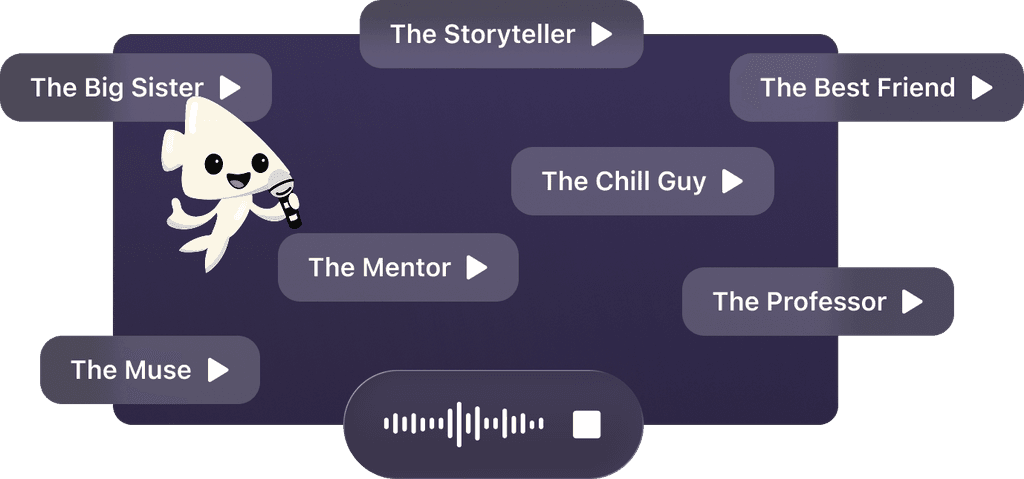
Feel the book through the author's voice
Turn knowledge into engaging, example-rich insights
Capture key ideas in a flash for fast learning
Enjoy the book in a fun and engaging way
Characters in The Power of Now
- Eckhart TolleAuthor and spiritual teacher
Key Themes in The Power of Now
- egoic mind identification
- psychological time transcendence
- witnessing presence
- emotional pain-body
- radical acceptance
Quotes from The Power of Now
What if your suffering isn't caused by life's circumstances but by your mind's constant escape from the present moment?
We become so absorbed in our mental narratives that we miss the richness of our actual lived experience.
Whatever the present moment contains, accept it as if you had chosen it.
The light of consciousness is transformative.
Explore Your Way of Learning
 Quick Summary Mode
Read or listen to The Power of Now Summary in 8 Minutes
Break down key ideas from The Power of Now into bite-sized takeaways to understand how innovative teams create, collaborate, and grow.

 Fun Mode
The Power of Now Lessons Told Through 19-Min Stories
Experience The Power of Now through vivid storytelling that turns innovation lessons into moments you'll remember and apply.
 Personalize Mode
Experience The Power of Now in your own learning style
Ask anything, choose your learning style, and co-create insights that truly resonate with you.
From Columbia University alumni built in San Francisco
"Instead of endless scrolling, I just hit play on BeFreed. It saves me so much time."


"I never knew where to start with nonfiction—BeFreed’s book lists turned into podcasts gave me a clear path."


"Perfect balance between learning and entertainment. Finished ‘Thinking, Fast and Slow’ on my commute this week."
"Crazy how much I learned while walking the dog. BeFreed = small habits → big gains."
"Reading used to feel like a chore. Now it’s just part of my lifestyle."

"Feels effortless compared to reading. I’ve finished 6 books this month already."
"BeFreed turned my guilty doomscrolling into something that feels productive and inspiring."

"BeFreed turned my commute into learning time. 20-min podcasts are perfect for finishing books I never had time for."
"BeFreed replaced my podcast queue. Imagine Spotify for books — that’s it. 🙌"

"It is great for me to learn something from the book without reading it."
"The themed book list podcasts help me connect ideas across authors—like a guided audio journey."
"Makes me feel smarter every time before going to work"
From Columbia University alumni built in San Francisco
"Instead of endless scrolling, I just hit play on BeFreed. It saves me so much time."
"I never knew where to start with nonfiction—BeFreed’s book lists turned into podcasts gave me a clear path."
"Perfect balance between learning and entertainment. Finished ‘Thinking, Fast and Slow’ on my commute this week."
"Crazy how much I learned while walking the dog. BeFreed = small habits → big gains."
"Reading used to feel like a chore. Now it’s just part of my lifestyle."
"Feels effortless compared to reading. I’ve finished 6 books this month already."
"BeFreed turned my guilty doomscrolling into something that feels productive and inspiring."
"BeFreed turned my commute into learning time. 20-min podcasts are perfect for finishing books I never had time for."
"BeFreed replaced my podcast queue. Imagine Spotify for books — that’s it. 🙌"
"It is great for me to learn something from the book without reading it."
"The themed book list podcasts help me connect ideas across authors—like a guided audio journey."
"Makes me feel smarter every time before going to work"
"Instead of endless scrolling, I just hit play on BeFreed. It saves me so much time."
"I never knew where to start with nonfiction—BeFreed’s book lists turned into podcasts gave me a clear path."
"Perfect balance between learning and entertainment. Finished ‘Thinking, Fast and Slow’ on my commute this week."
"Crazy how much I learned while walking the dog. BeFreed = small habits → big gains."
"Reading used to feel like a chore. Now it’s just part of my lifestyle."
"Feels effortless compared to reading. I’ve finished 6 books this month already."
"BeFreed turned my guilty doomscrolling into something that feels productive and inspiring."
"BeFreed turned my commute into learning time. 20-min podcasts are perfect for finishing books I never had time for."
"BeFreed replaced my podcast queue. Imagine Spotify for books — that’s it. 🙌"
"It is great for me to learn something from the book without reading it."
"The themed book list podcasts help me connect ideas across authors—like a guided audio journey."
"Makes me feel smarter every time before going to work"
"Instead of endless scrolling, I just hit play on BeFreed. It saves me so much time."
"I never knew where to start with nonfiction—BeFreed’s book lists turned into podcasts gave me a clear path."
"Perfect balance between learning and entertainment. Finished ‘Thinking, Fast and Slow’ on my commute this week."
"Crazy how much I learned while walking the dog. BeFreed = small habits → big gains."
"Reading used to feel like a chore. Now it’s just part of my lifestyle."
"Feels effortless compared to reading. I’ve finished 6 books this month already."
"BeFreed turned my guilty doomscrolling into something that feels productive and inspiring."
"BeFreed turned my commute into learning time. 20-min podcasts are perfect for finishing books I never had time for."
"BeFreed replaced my podcast queue. Imagine Spotify for books — that’s it. 🙌"
"It is great for me to learn something from the book without reading it."
"The themed book list podcasts help me connect ideas across authors—like a guided audio journey."
"Makes me feel smarter every time before going to work"

Download Summary of The Power of Now
Get the The Power of Now summary as a free PDF or EPUB. Print it or read offline anytime.


